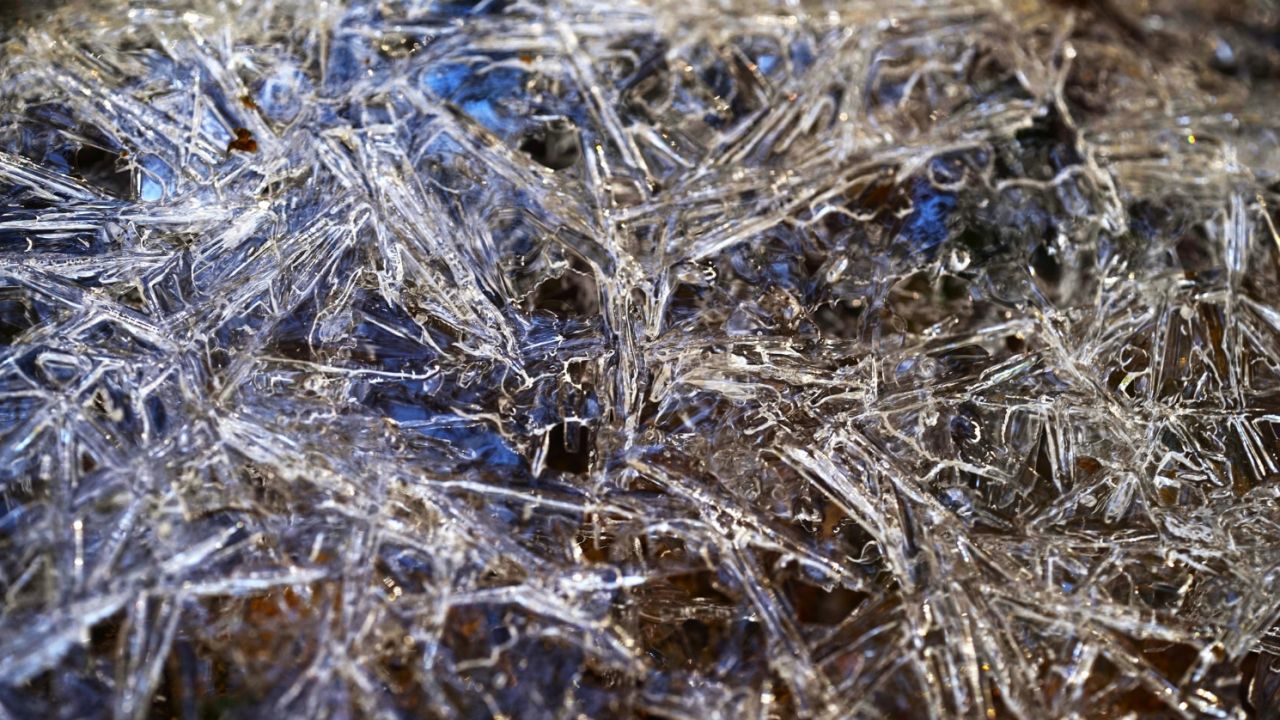
Visitors to the Polish mountains have been captivated by a rare and striking ice formation that resembles needles or broken glass. This phenomenon, known as frazil ice, occurs under specific cold conditions and is characterized by its sharp, needle-like appearance.
The formation typically appears on the surface of freezing bodies of water, such as lakes and rivers, during periods of intense cold. As the water cools rapidly, small ice crystals form and cluster together, creating these elongated, fragile structures that resemble shards of glass or delicate needles.
This extraordinary natural display has drawn the attention of both scientists and tourists alike. Experts explain that frazil ice forms when supercooled water contains a high concentration of tiny ice crystals, which then coalesce and float to the surface. The process is influenced by factors such as water temperature, flow rate, and turbulence.
The visual impact of frazil ice is particularly impressive in the early morning or during calm weather, when sunlight reflects off the sharp, translucent structures, creating a shimmering, almost surreal landscape. Photographers and nature enthusiasts have been flocking to the area to capture the breathtaking scenery.
While frazil ice is a natural part of the winter cycle in cold regions, its appearance is relatively rare and fleeting. The formations can vary in size and shape, often forming dense clusters that resemble a field of needles or shards of glass frozen in time.
Scientists continue to study frazil ice to better understand its formation and behavior, especially as climate patterns shift and influence winter conditions. The phenomenon not only offers a mesmerizing visual spectacle but also provides insights into the dynamics of freezing water bodies in cold environments.
In summary, the rare needle-like ice formations in the Polish mountains serve as a stunning reminder of nature's beauty and complexity during winter. Their delicate, glass-like appearance continues to fascinate visitors and researchers alike, highlighting the extraordinary phenomena that can occur in the coldest months of the year.